
You might not guess from the general contents of this blog, but I do a fair amount of Indian cooking. I’m about as Anglo-Saxon-Germanic as you can get (blonde hair [check] ; blue eyes [cheeyeck] ; pasty-white skin that were it not for the rosacea I would look perpetually sick [hmph, check] ), so I grew up with potatoes and pot roast and apple streusel, not the richly perfumed bouquets of coriander and cloves and cinnamon and cumin. My education in the spicy wiles of Indian curries has been a recent but decadent adventure. There’s a reason Chicken Tikka Masala [2] is the National Food of Britain: it’s glorious. I don’t know any other way to say it.
Although the base spices, like coriander and cumin, are readily available everywhere ’round these parts, there’s one blend that’s really hard to find: garam masala. I’m lucky in that one of the rare stores to carry it is only about a mile away from my house, but unlucky in that it’s $5.69 for a little 1.8 oz jar. And I go through a lot of garam masala: one dish can easily use 1 to 2 tablespoons. There had to be a cheaper way.
One little fact I came to learn was that there are as many ways to make garam masala as there are curries. Families have cherished recipes and secret ingredients, each as different and alluring as the next, that are passed from generation to generation. I don’t know what gall possessed me to create my own blend, given my amateur Indian cooking status, but the result has been so enjoyable and satisfying (and cheap! hey, I gotta be me…), that I wouldn’t have it any other way.
They key to “delicious” is finding quality ingredients. The key to “cheap” is buying them in bulk. There’s the internet, of course, so if all other avenues fail, turn to Amazon. In Cincinnati, however, we are lucky to have a bulk supplier in the form of Colonel De’s Spices, based out of Findlay Market. For less than two retail jars’ worth of garam masala, I can come home with a bag brimming over with enough herbs and spices to last months … and many, many jars of garam masala. Truly awesome.

Whole herbs and spices are first gently toasted to bring out the very best of their flavors.

Then they’re left to cool completely. Don’t rush it – grinding warm spices more often than not produces a paste instead of a powder.

This stone mortar and pestle is awfully fun. Got a little frustration building up? Work it all out with this thing. It’s particularly suited for grinding large amounts of black pepper – much faster than a mill (call me wimpy, but I find it sigh-inspiring, trying to twist out a 1/2 teaspoon of pepper). I also use an electric coffee grinder devoted to spices (once you grind cloves in it, don’t use it again for coffee – you’ll never get all the clove residue out). Just take it slow. The friction of the blades can actually burn the spices. Grind the big pieces first (like the cinnamon sticks), and work your way down to the smallest. Bay leaves go last.

Fresh, fragrant garam masala. Try my Chicken Tikka Masala recipe [2], which takes great advantage of garam masala. Chicken heaven, I do believe.
Karen xo
Recipes that use Garam Masala:
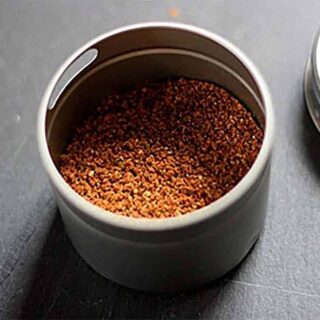
Garam Masala Spice Blend

Ingredients
- 9 sticks cinnamon , about 1 inch each
- 2 teaspoons whole coriander seeds
- 2 teaspoons cumin seeds
- 1 heaping teaspoon whole cloves
- 1 teaspoon black cumin seeds
- 1 teaspoon black peppercorns
- 1 teaspoon cardamom
- 2-3 bay leaves
Instructions
- Place all ingredients in a small pan over medium heat. Stir as pan begins to heat up. When the whole spices begin to turn color and become fragrant, remove from heat and transfer to a plate.
- Allow to cool completely.
- Place ingredients in a mortar or spice/coffee grinder. Grind to a fine powder. Tip: it’s easier if you start with the largest pieces, such as the cinnamon sticks and cloves, and then add the remaining seeds, ending with the bay leaves.
- Transfer to an airtight container. Blend will keep for a couple of months.